TrialTwin :: Data Standards Governor
Backstory: Connected Standards Enablement Initiative
A clinical data management group inside a large pharma company approached us to help them improve the way they manage the necessary connections between their clinical standards. This group manages standards on different levels and ranging from data collection (CRF, Data Transfer Agreements) to data delivery (SDTM) and analysis (ADaM).
The standards were maintained as file-based tables. ("Metadata management by Excel files," as they put it).
The most significant challenge was how to properly represent, and update, the multiple relationships across standards. They had no easy solution to maintain these relationships in a consistent way. This in fact led to complex and manual manipulation when standards in one domain are to be upgraded or changed. The impact of changes in connected standards is a tedious and time consuming – often manual – work.
- In the pharma industry compliance is a submission requirement:
submission data sets are expected to consistently apply CDISC terminology where available
sponsors are expected to define and consistently apply additional terminologies when not available in CDISC terminology
We developed a customized system that enables our client to store and manage the connected standards. The solution is already delivering benefits for the standards team, while allowing to output data in a format that can be used with the client's current downstream processes. The system makes the data available to a larger audience in a user-friendly way and allows for automating consumption by downstream tooling, like conversion and data review tools.
Our Solution
This is a high-level view of the benefits our system delivers to our client.
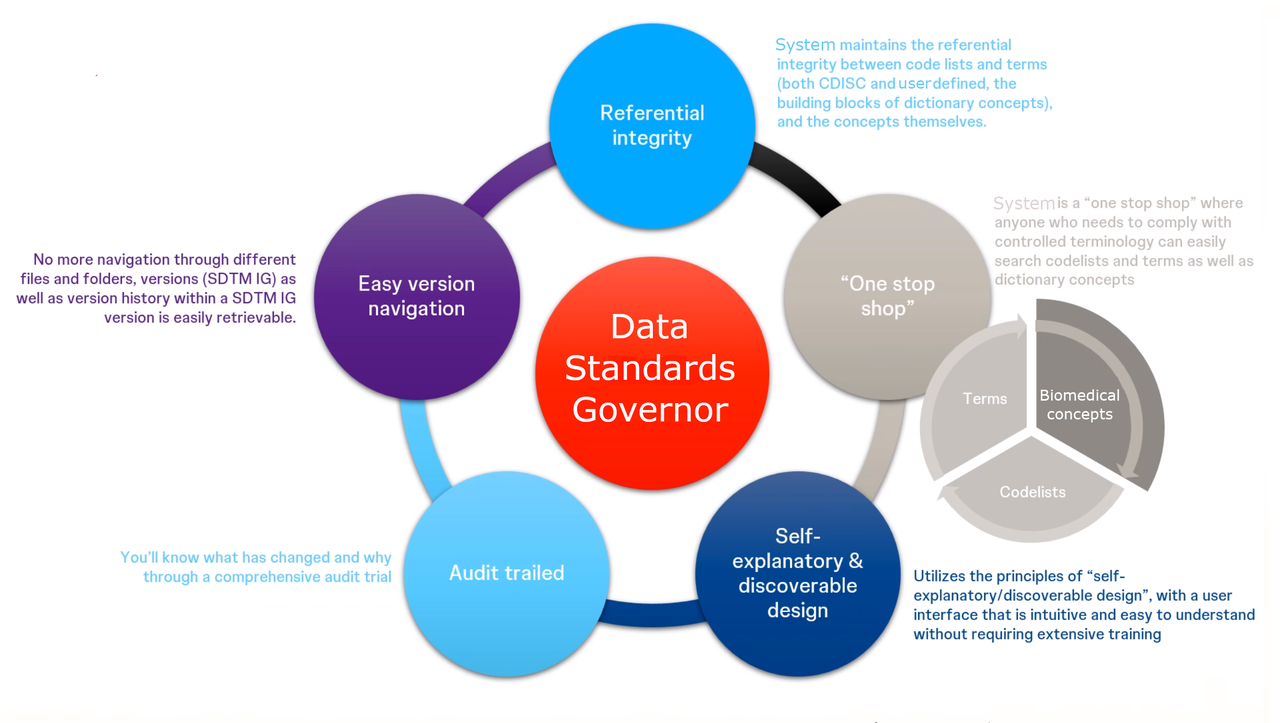
- Summary:
Near real-time content management and availability
Single source for connected, reusable and easy-to-find clinical terminology and concepts
Easier and faster to be compliant with regulatory requirements
The system is API-first, with a robust role-based access control mechanism. And we're fully integrated into standards SSO platforms (i.e. Microsoft's Entra and Okta).
Our system is a SaaS platform that stores, curates, and governs industry-standard terminologies, code-sets, and reference data needed for regulatory submissions (drugs, devices, and diagnostics).
Client avoids the "terminology drift" problem when different synonyms, and/or outdated codes are used in studies.
Technical Details
Now, these are specific details on the system's capabilities.
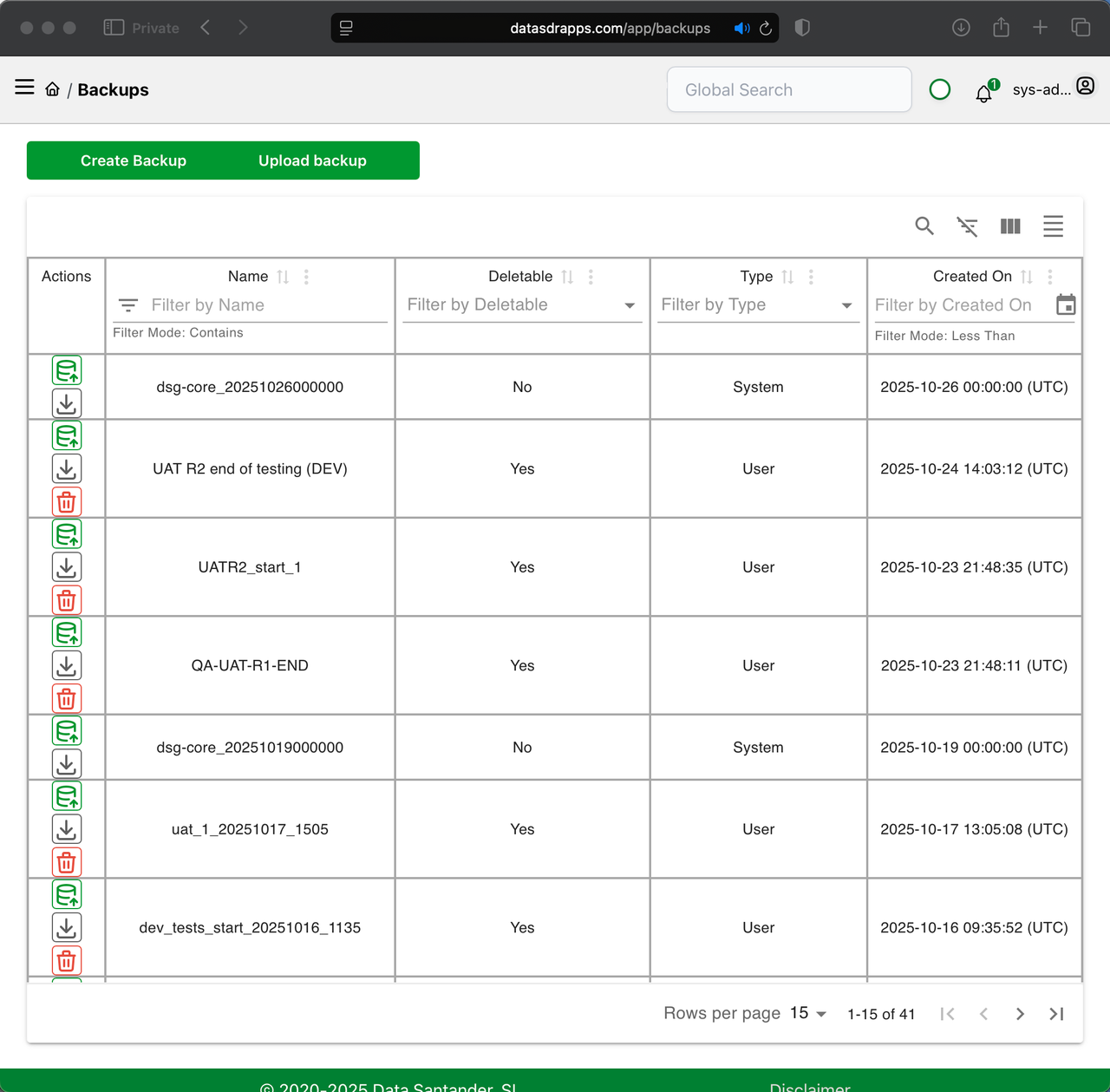
Integrated Backups
- System has built-in backup capabilities to:
safely make backup copies of the system's state at any point in time
roll back the system's content to a previous state
authorized users can perform both backup and restore actions
Content Catalog
- The system can handle a wide variety of what we call "Item Types." Each Item Type is defined internally using JSON, giving system an almost limitless ability to handle from the simple ones to the most complex data types:
Term
Biomedical Concept
CRFs
Libraries
Studies
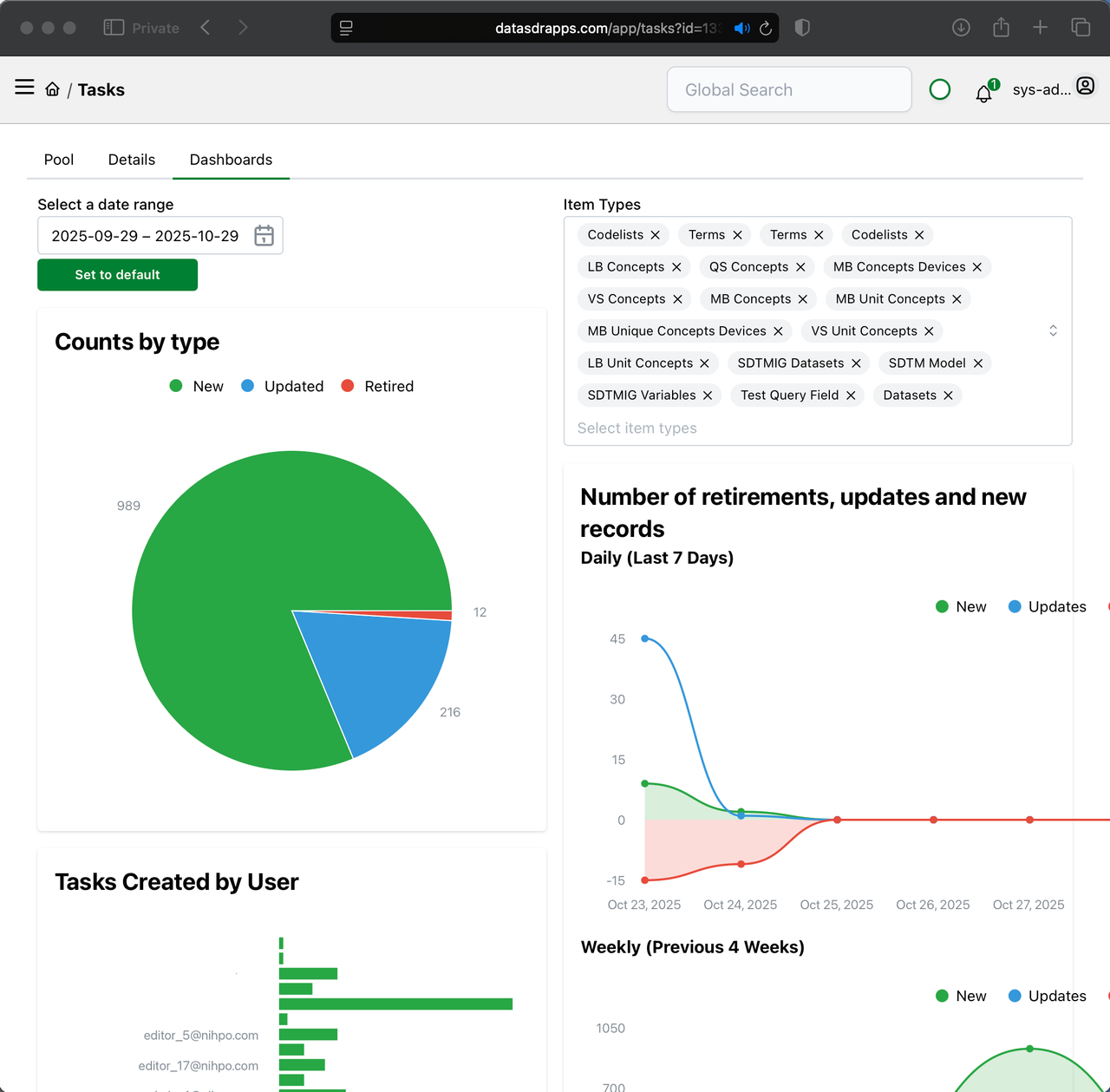
Dashboards
System provides multiple visual displays of information. Each dashboard can be easily customized to better fit a client's needs.
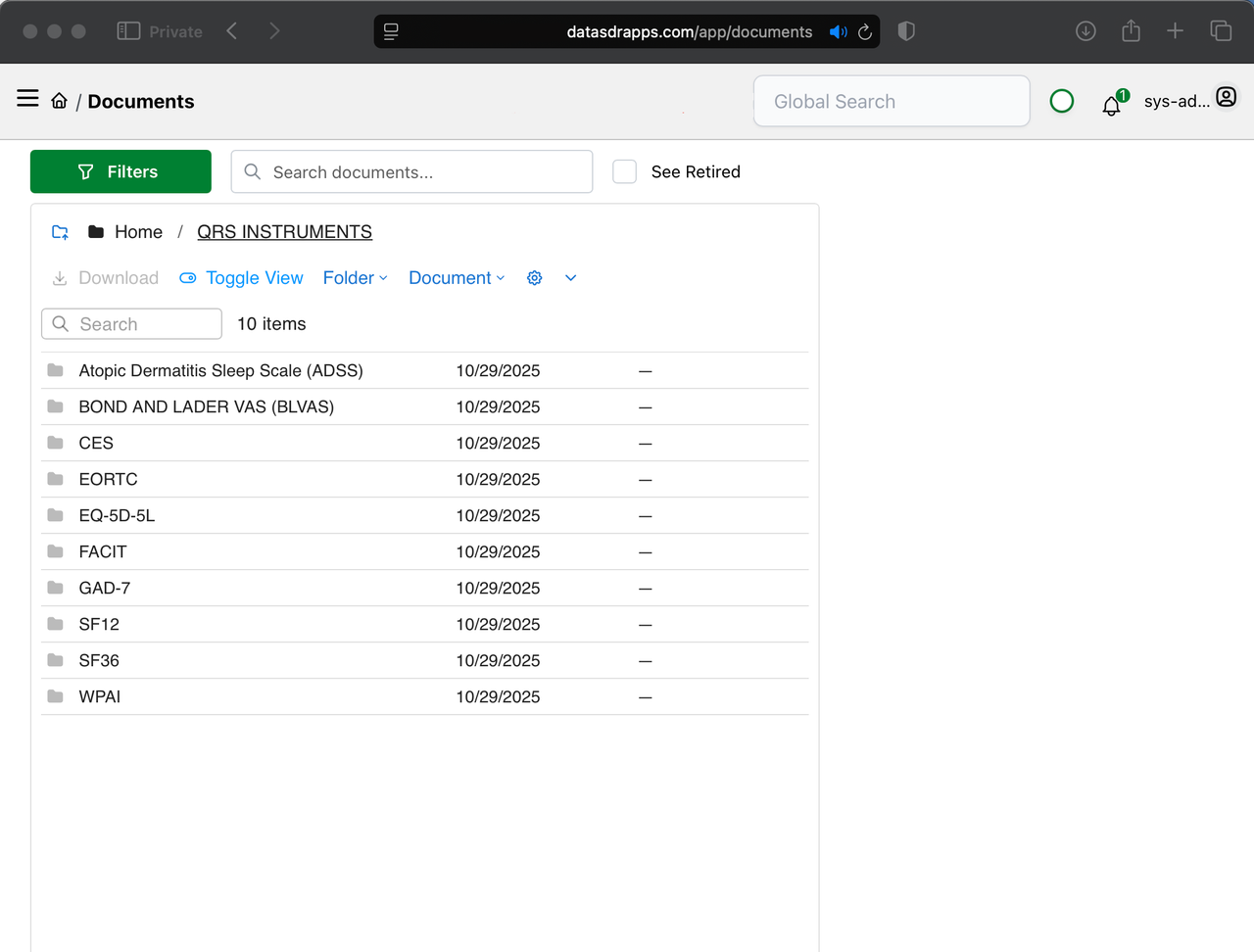
Document Repository
System is able to handle documents (Excel, PDFs, Word) with full version control.
And each document can be tied to one or many terms or concepts in any of the available collections.
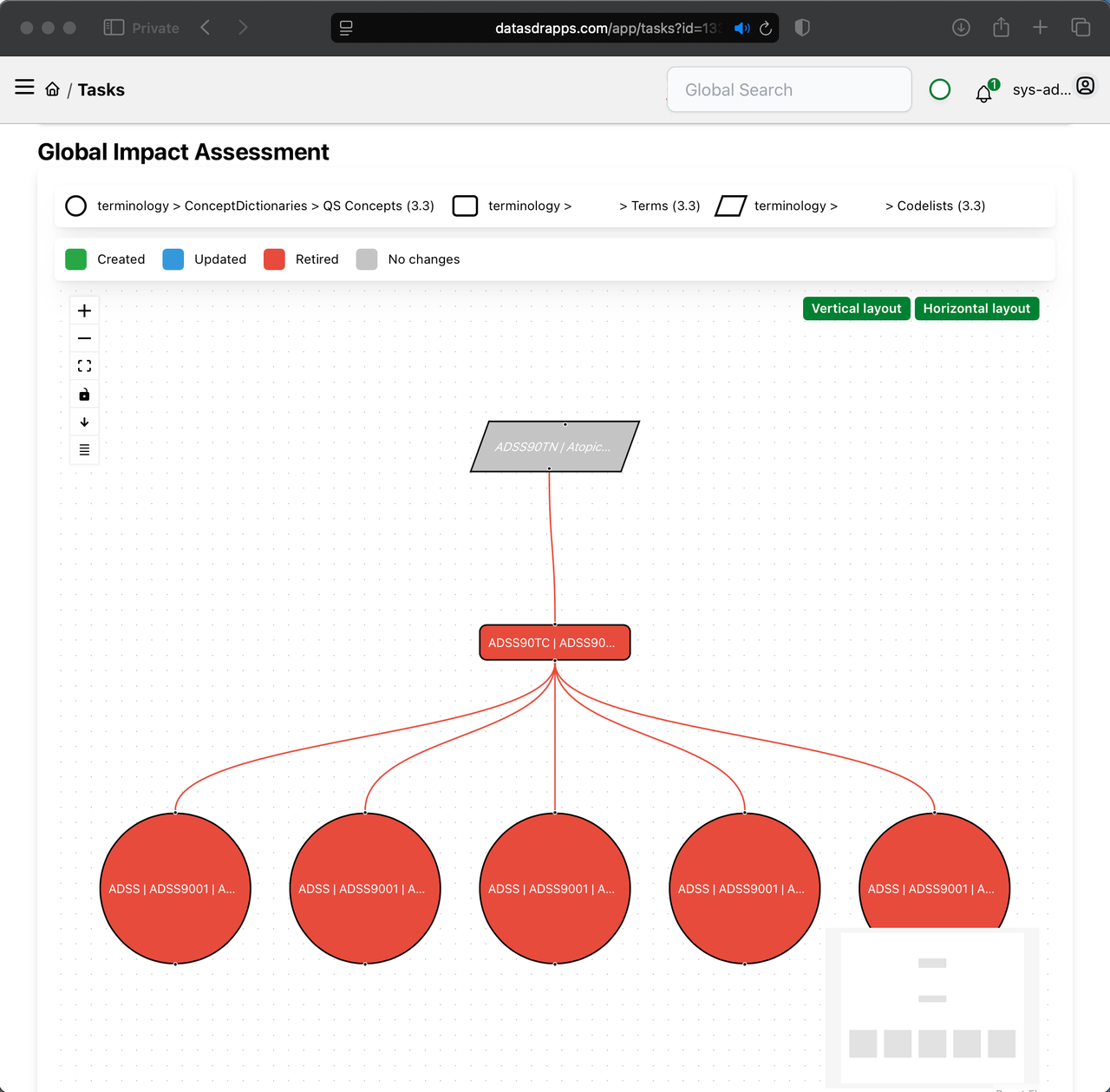
Impact Assessment
One of the neat features of the system is the ability of a user to visually see the impact of a proposed change.
For example: when editing a codelist, the system graphically displays all related items that will be impacted by the addition / edition / deletion of the intended change.
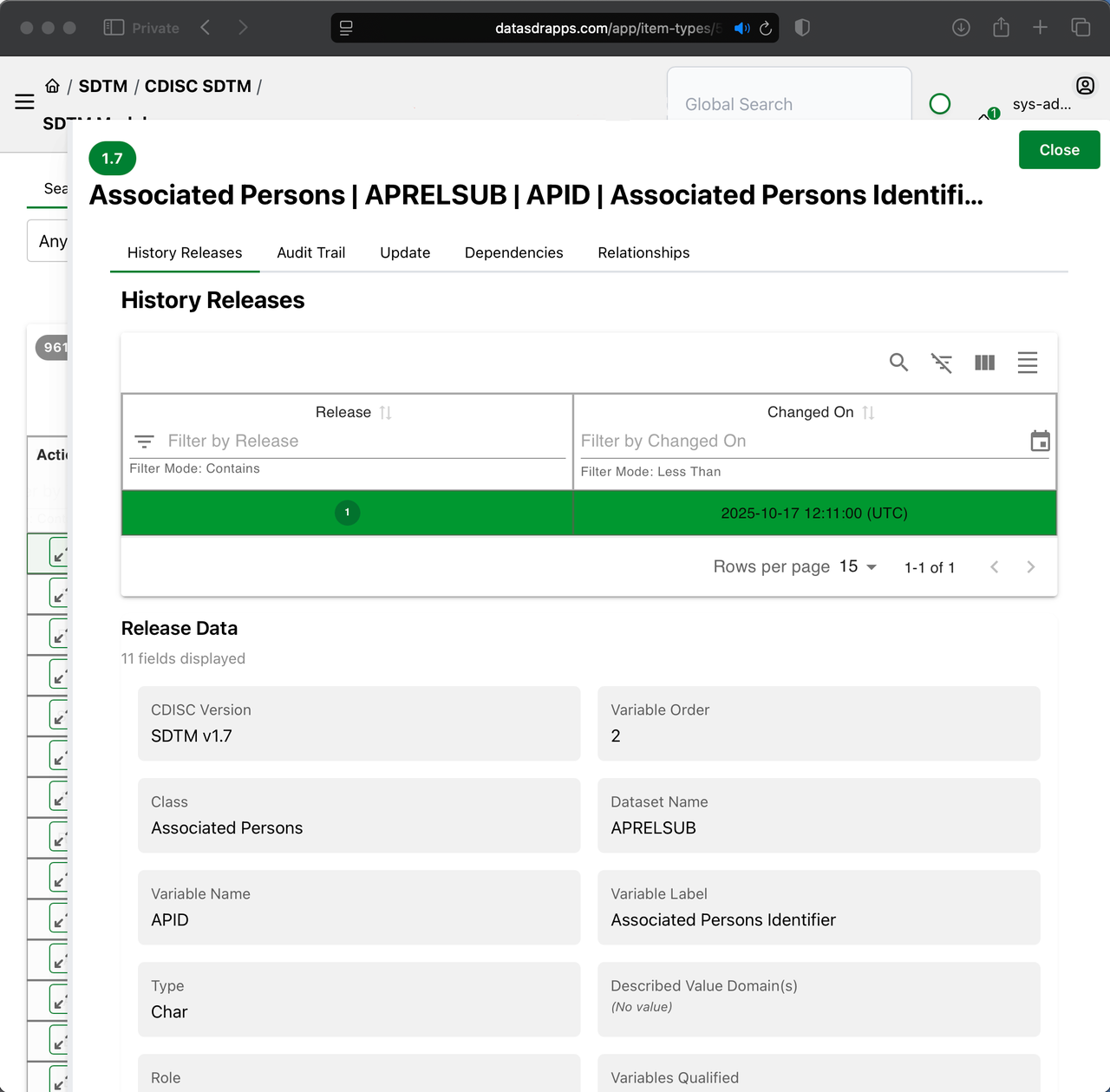
Item-level History Releases
Authorized users can "package" versions of content into date-based releases to better match business cycles.
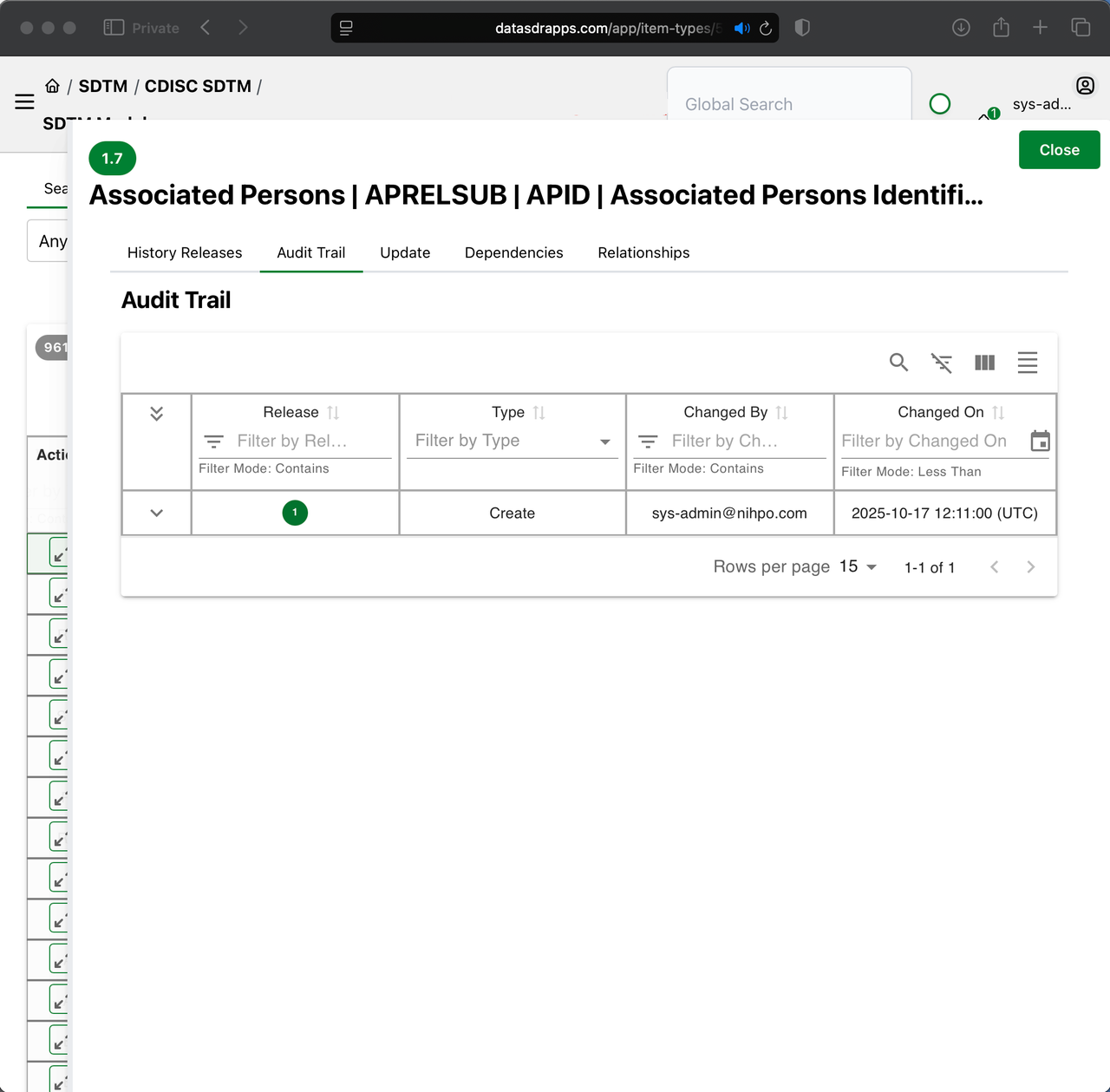
Item-level Audit Trail
The system is designed to capture Who did What When How at the item level.
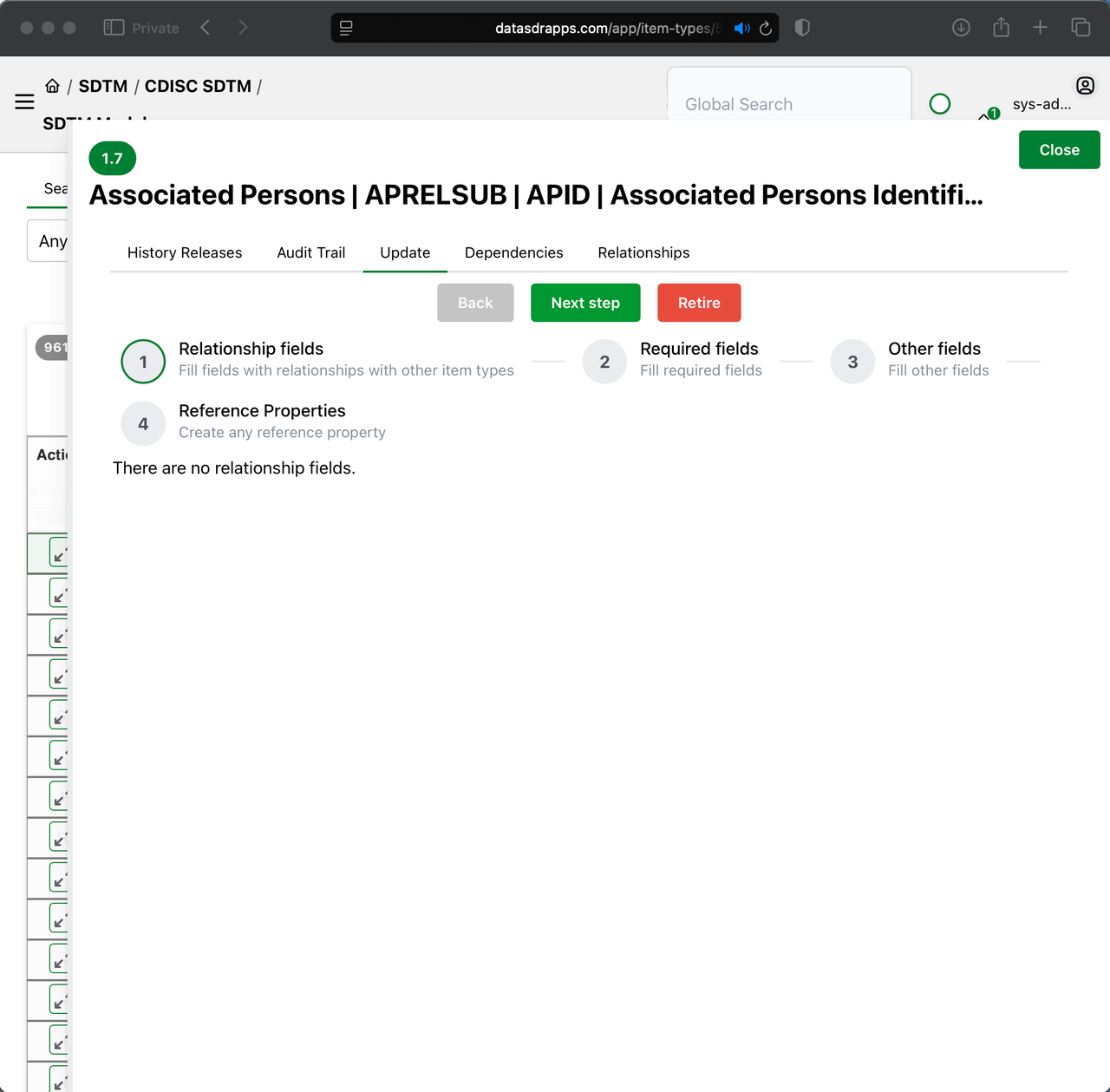
Item-level Updates
Each item can be updated, and system will guide user to fill out the required fields (as defined by the item-level metadata).
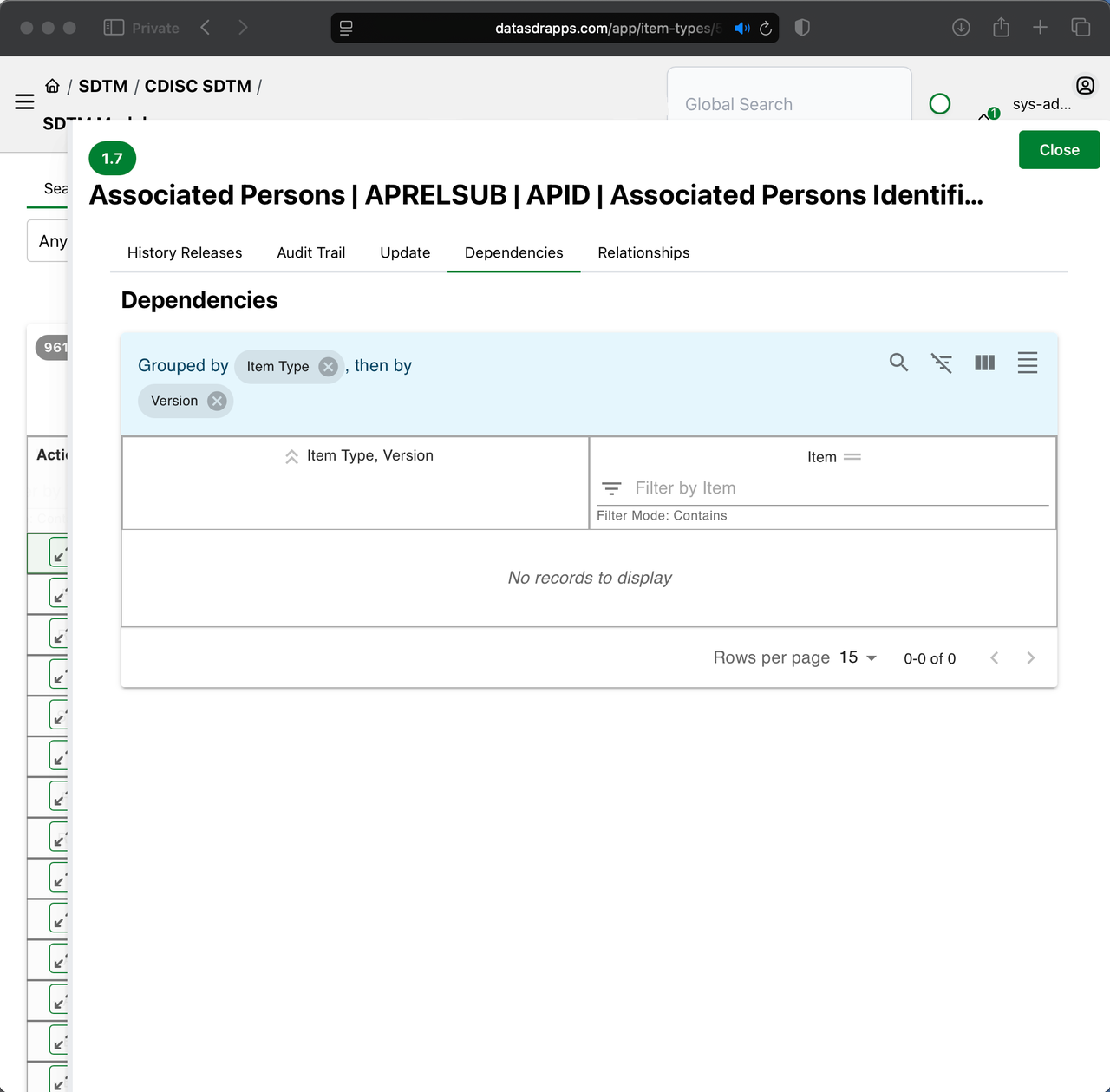
Item-level Dependencies
Depending on its metadata definition, an item can have dependencies on other items.
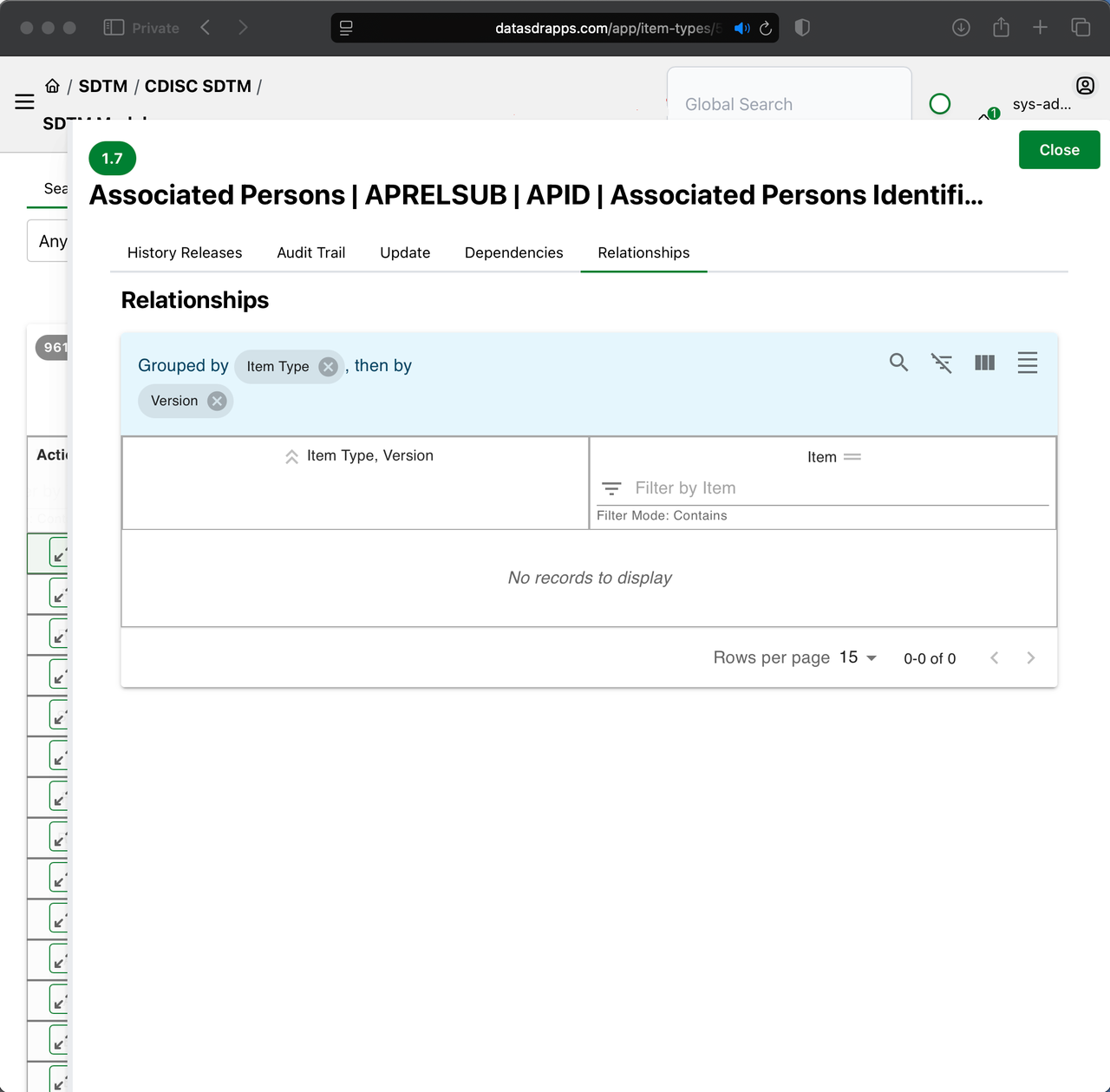
Item-level Relationships
Depending on its metadata definition, an item can have relationships with other items.
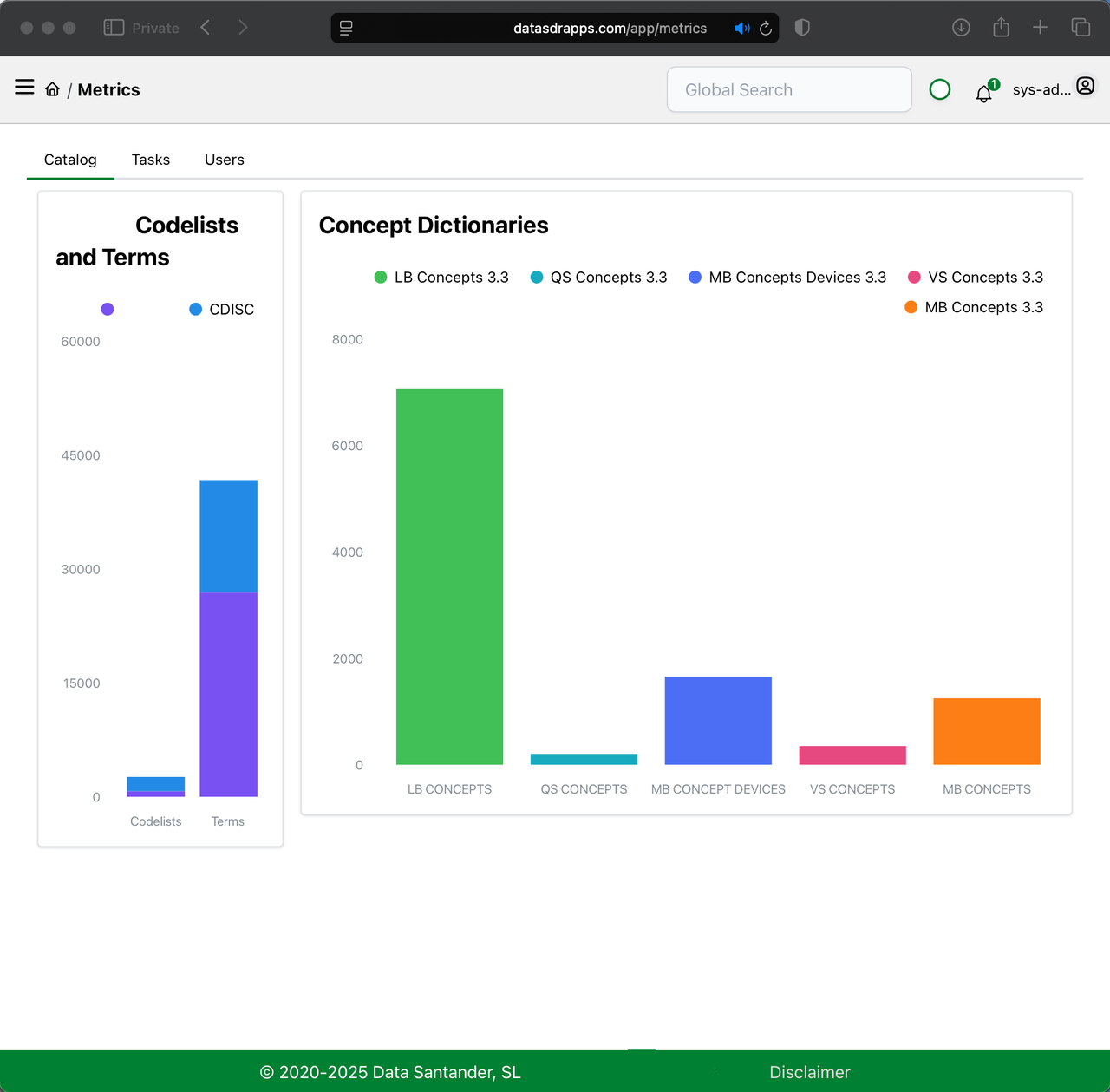
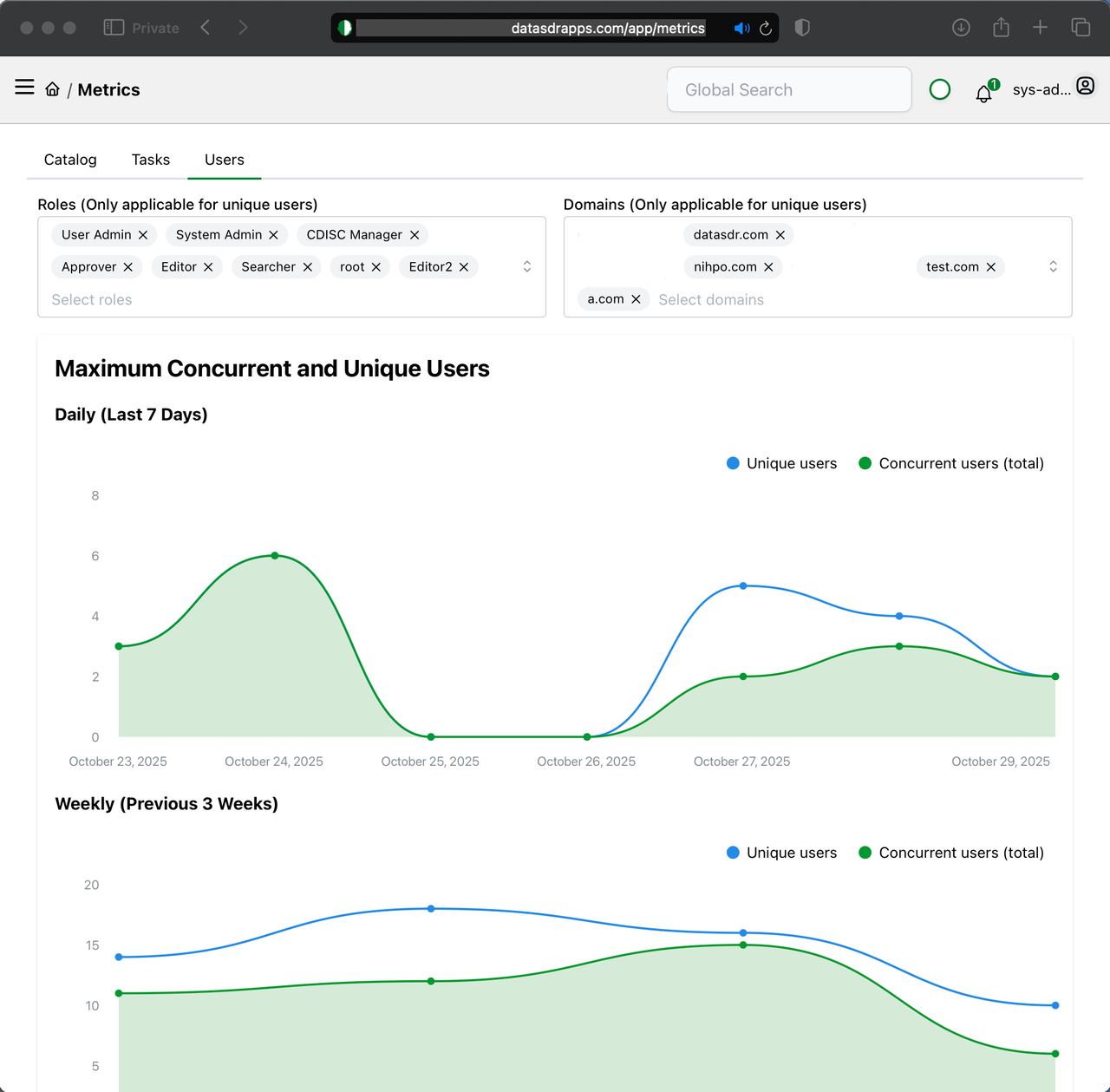
Metrics
System provides authorized users with detailed metrics in terms of usage patterns, tasks, content volume, etc.
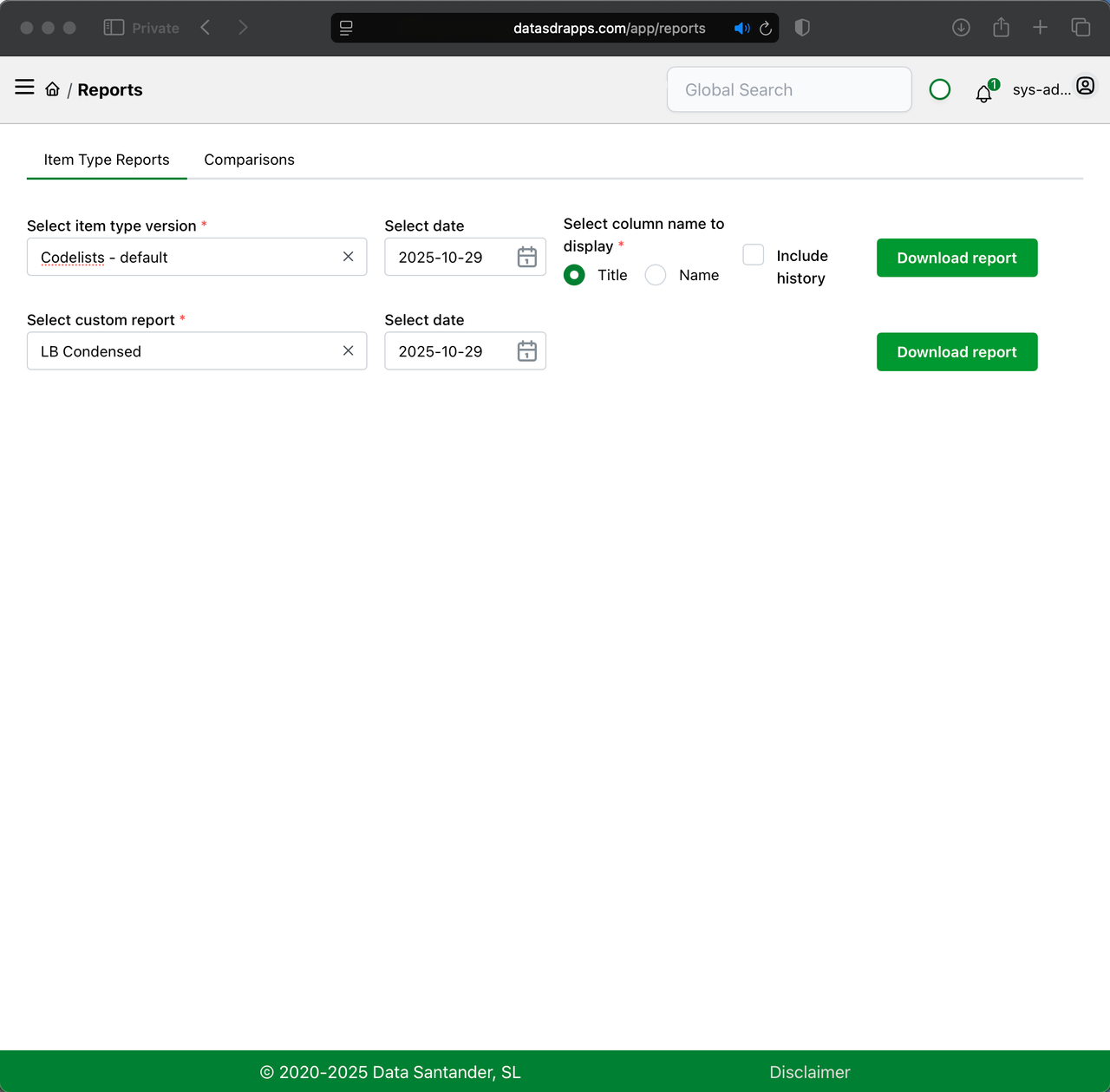
Reports
System is pre-loaded with default reports. Additional reports can be easily created to fit a client's needs.
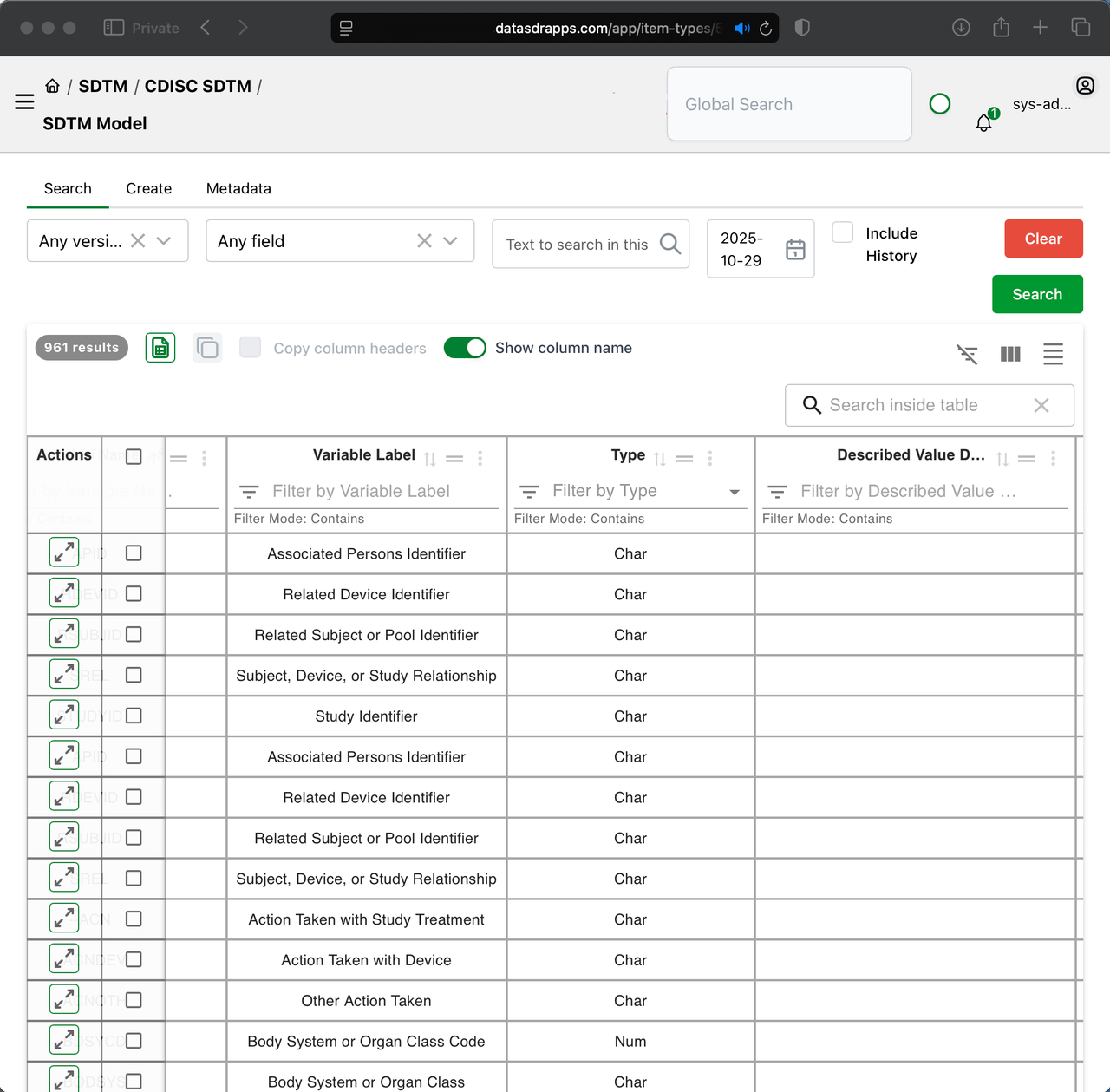
SDTM Model
This is a screenshot of SDTM data stored in system.
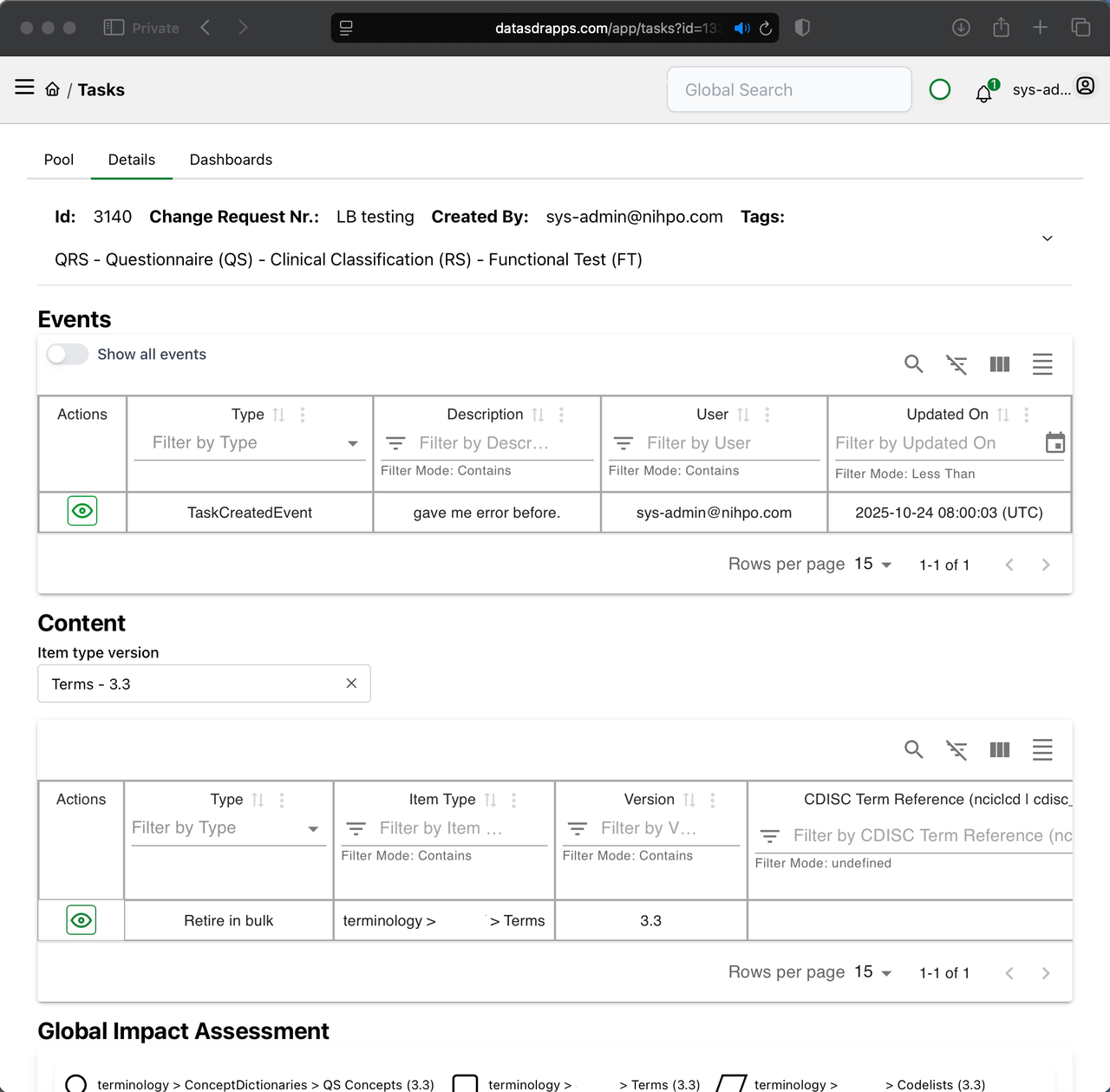
Task Management
System has a built-in task management system to assist content editors in the management and approval of content changes.
Business Benefits
- Clients using the system benefit through:
significant time savings (no more scouting websites and fetching Excel files)
peace of mind that their organization uses the correct data and terminology standards
a single, unified platform for all relevant standards: industry-defined as well as client-specific
automated terminology alignment between industry and client-defined terms
the ability to move to different versions of standards (ie. SDTM) at the client’s pace
allowing individual trials to start and use different versions of standards and terminologies
a clear view of standard changes to determine what to do to upgrade trial data to new standard
a comprehensive Data Governance process: version control, traceability, and full provenance
the ability to augment industry standards with client-specific standards and terminologies
use of platform for post-clearance submissions as well (i.e. standards-compliant ICSRs)
a fully hands-off, done-for-you service available immediately
We presented our system's vision at the PHUSE EU Connect 2023 event with our Metadata-Driven Platform paper.
Contact us
Please contact us for more details.